Service
Jersey names and numbers, applied on site
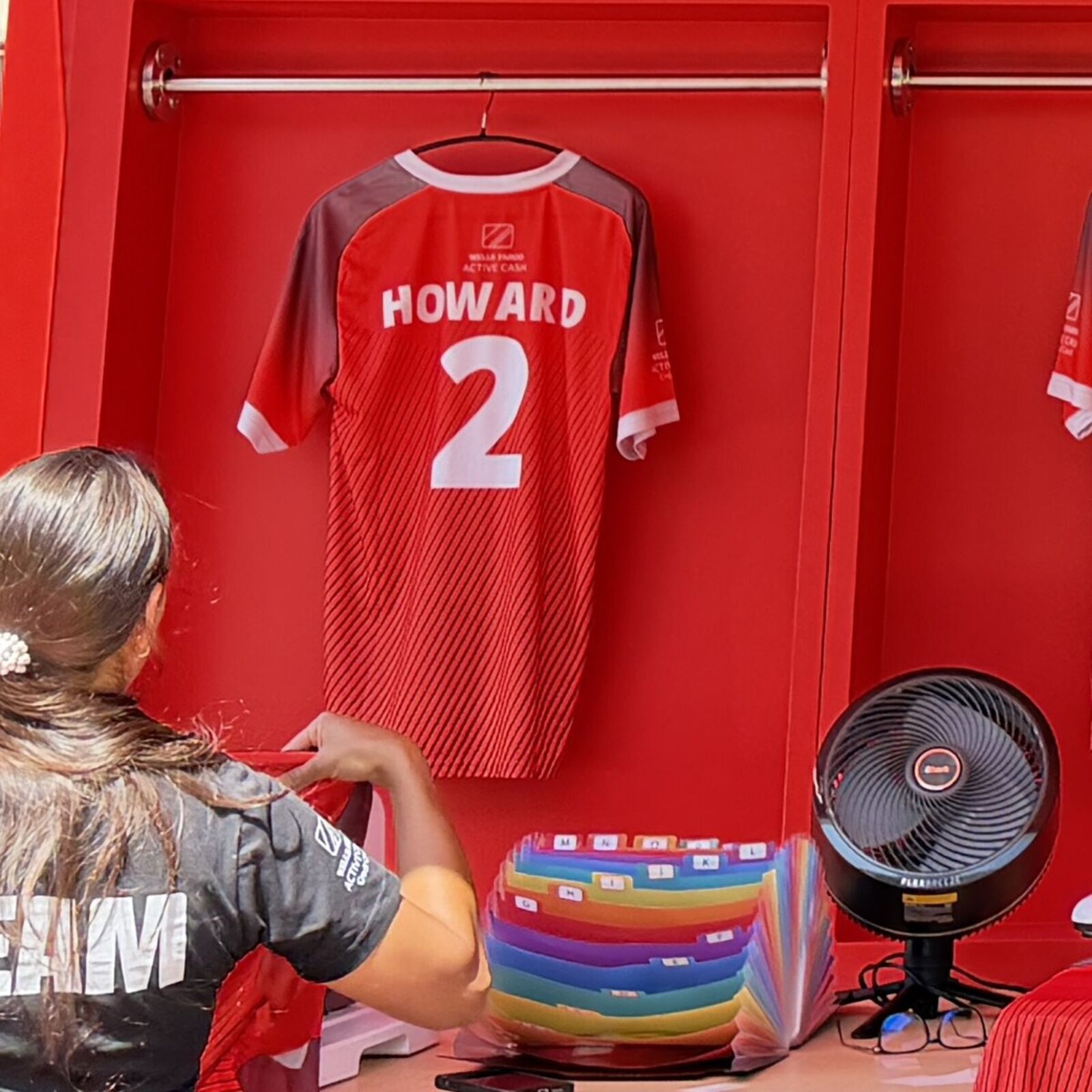
This is the thing itself. A guest picks a jersey, types a name and a number, and a crew member presses it onto the garment in front of them. Everything else on this site — lanes, queues, fabric recipes, power sheets — exists to make that one moment repeatable a few hundred times in an afternoon.
Included
What arrives with the crew
Presses and lanes
One press and one operator per lane, two to four lanes on a typical build, spare platens for tanks, sleeves and youth cuts, and at least one spare press on multi-lane jobs. Transfer stock is produced and sorted before load-in.
Tablet stations
Guests enter their name and number, choose size and colour, and confirm the print location. Each entry becomes a numbered ticket. Sizes are capped live, so a sold-out size leaves the picker instead of disappointing someone at the counter.
Numeral and lettering setup
Numeral face, name band, outline treatment, colour and height per size band, all proofed before the truck loads. Sponsor marks and crest art are set relative to whatever is already on the garment.
Crews scale roughly one press lane and one operator per station. Larger builds add dedicated intake, a folding and handoff table, and a blank runner who keeps every press stocked by size and colour — a role that usually buys more throughput than adding another press. The full role breakdown and load-in sequence live on line setup.
Standard
How a name and number is laid out
Names run to about nine characters. Numbers run one to three digits. That cap is geometry, not machinery: a jersey back is a fixed, curved canvas, and past nine letters the type either shrinks until it reads as a label or the tracking collapses into a dark bar. We put the limit on the tablet before the guest types, which turns a disappointment into a non-event.
Everything aligns to the centre back seam rather than the optical centre of the panel. On cuts with contrast side panels those are different points, and the seam is what a viewer reads as centre once the jersey is on a body.
Numeral heights are set per cut. A basketball tank takes a smaller number than a football back; a soccer shirt with a sponsor bar takes less than either. We scale across size bands so a small and a 2XL look like part of the same set rather than two different events. The detail on all three cuts is in basketball and football jersey numbers and soccer jersey printing at events.
Print location is configurable per event — back, front, sleeve — along with garment colour and a short menu of design choices. We argue for a short menu deliberately. Every extra decision at the tablet is time that the entire queue behind that guest pays for.
Method
Pressed on the day, stitched before it
Live application is full-colour DTF on a calibrated heat press. Name, numeral, outline, shadow and any sponsor element are a single transfer, so there is no colour registration to align and no drying between hits. It bonds properly to the slick tricot, textured knits, open mesh and sublimated panels that modern jerseys are cut from — and unlike cut vinyl, it does not bridge the holes in mesh and lift.
Tackle twill and embroidery are both available and both look right on heritage kit, keepsake garments and crests that want dimension. Neither compresses into the cycle a live queue needs, so we apply them ahead of the event on garments known in advance. The hybrid that most jersey programs land on: stitched crests and sponsor marks done in advance, live names and numbers on site.
Press recipes are set per fabric by test pressing a garment from the actual run before doors, not from a spec sheet. Which fabrics behave how is covered in what kind of jerseys we can print on, and how long the result lasts is in do printed names and numbers crack or peel.
Garments
Your kit or our blanks
You supply. Extremely common with teams, leagues and sponsors who already own inventory. We take a sample from the real run, test the press settings on it, then personalize what you own. You pay for crew, transfers and logistics rather than garments you already bought.
We source. Augusta Sportswear and Badger cover most blank jersey needs in adult XS through 3XL. Bella+Canvas 3001 and Gildan handle a tee component, Richardson 112 or Flexfit the hat side, if the footprint runs a mixed station.
Pre-collected names. Rosters, RSVP lists and VIP lists sent several days out get gang-printed and sorted before load-in, which converts those guests from print-and-press into pick-and-press. It is the cheapest throughput you can buy.
What it costs
Staffed stations start around $5,000 for local events. Staffing runs $250/hr including setup and teardown. Travel is $0 inside Orange County, Los Angeles and San Diego and $900 beyond, with freight and lodging added for nationwide programs. Most corporate events land between $25 and $40 per guest all-in. The inputs that move the number are on pricing inputs, and realistic timing is on jersey printing turnaround times.
Live merch crews for Riot Games, Sony, Coca-Cola, Hyundai and Dickies have all come out of the same operation. Jersey work leads here, but the crew is a full live-merch outfit: DTF heat pressing, screen printing, embroidery, hat bar with patch application, laser engraving and UV DTF stickers.
Book a names and numbers station
Send the date, venue, jersey target and whether you own the kit. Send the brief · (562) 614-4800 · More answers