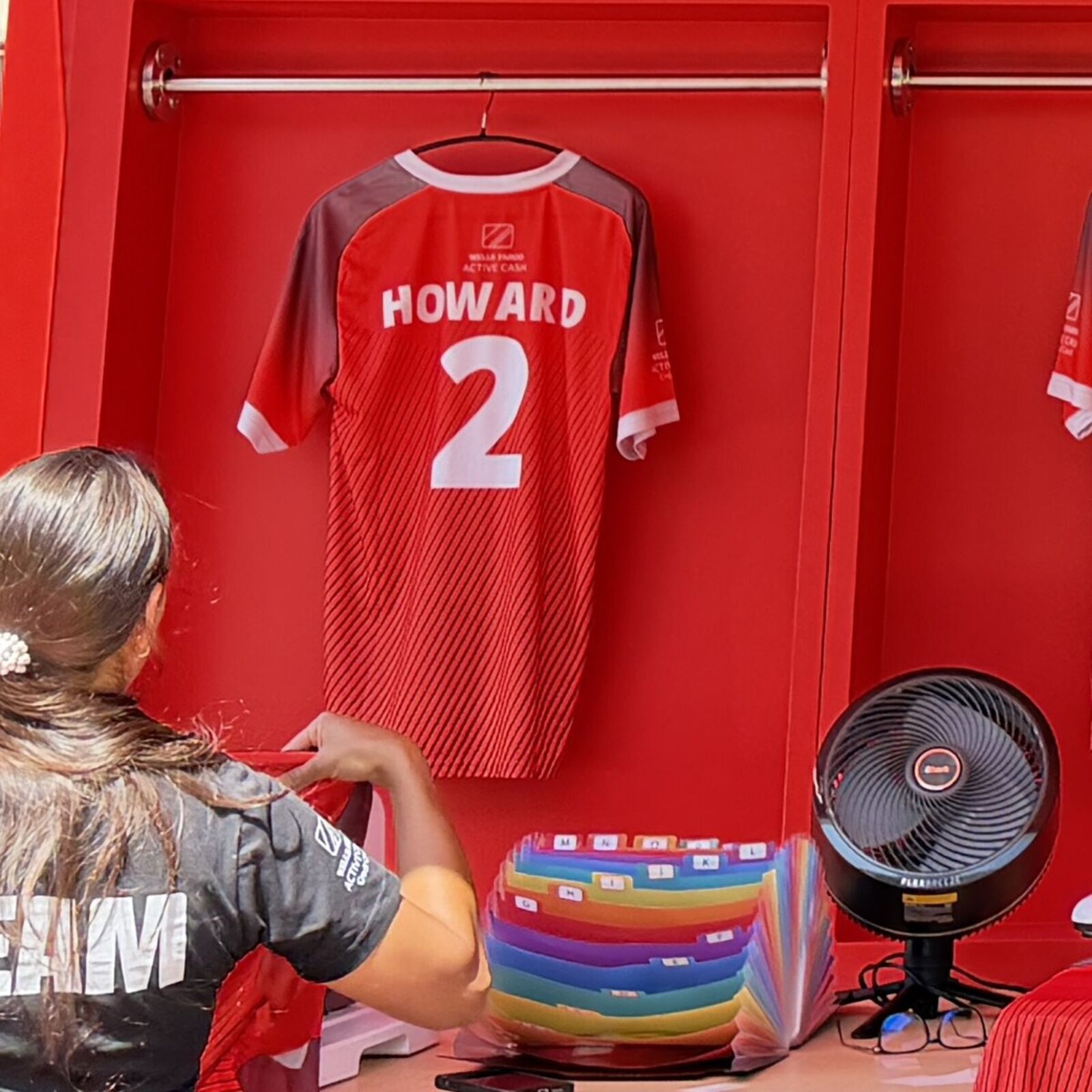
Names & numbers, pressed on site
Live jersey printing while your guests wait.
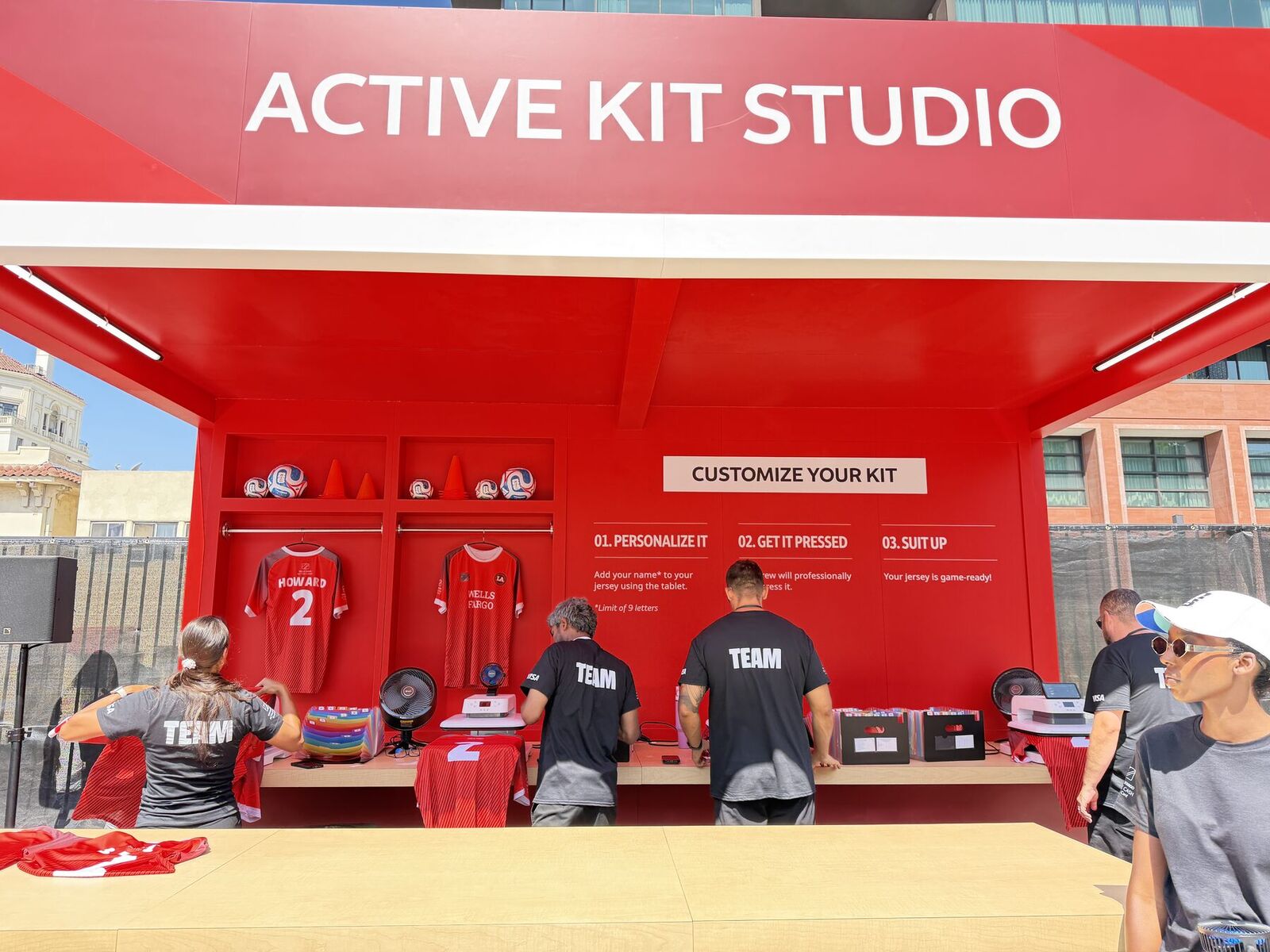
We roll in presses, blanks, tablet intake and operators and run a real production line inside your footprint. A guest picks a jersey, types a name and a number, and walks off wearing it. No shipping, no follow-up fulfillment, no leftover boxes.
Line spec
- Lanes
- 2–4 typical, scales up
- Crew
- 1 operator per lane
- Name cap
- 9 characters
- Numbers
- 1–3 digits
- Method
- Full-color DTF + heat press
- Sizes
- Adult XS–3XL
Client-supplied jerseys welcome. If your team already owns the kit, we bring only the personalization.
Live merch crews trusted by
- Riot Games
- Sony
- Coca-Cola
- Hyundai
- Dickies
The format
Three beats a guest actually feels
Everything else on this page serves these three moments. If one of them stalls, the line backs up.
Personalize it
The guest enters the name and number they want at a tablet station, picks a color and size, and confirms the print location. The entry becomes a numbered ticket the moment they hit submit.
Get it pressed
The ticket lands in a lane. An operator pulls the blank, positions the name and number, and presses it — full-color DTF, which is what actually holds on modern jersey fabric.
Wear it out
The finished jersey is handed back folded or on a hanger, game-ready, before the guest leaves the footprint. On premium tiers we text them when it is up instead of making them stand in the queue.
Throughput
How a jersey line actually paces
Lanes versus hours versus expected jerseys is arithmetic, and we would rather do it with you before the contract than explain it to your guests on site.
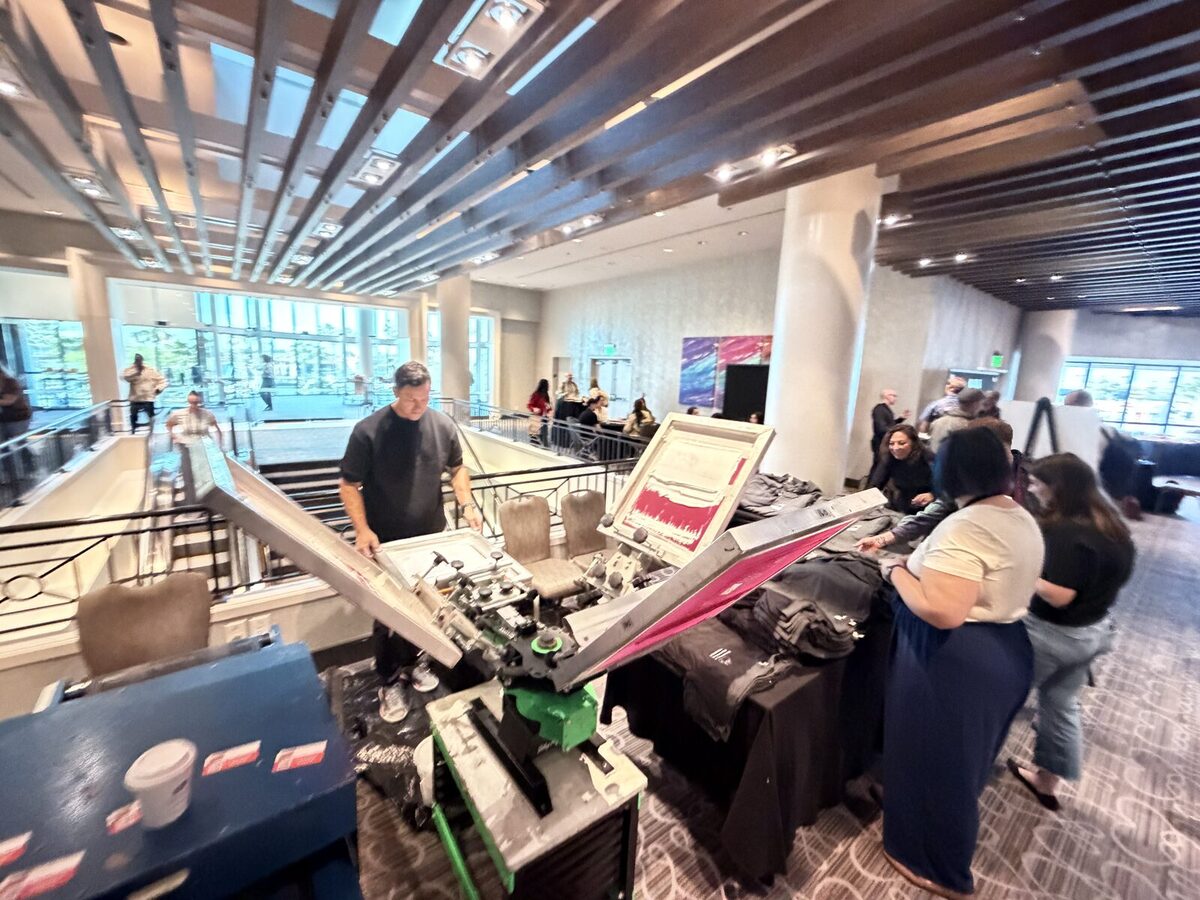
A lane is one press and one operator. Each personalized jersey is a short, repeatable cycle: pull the blank, lay it on the platen, align the name arc and the numeral, press, peel, fold. A trained operator repeats it steadily for hours, and the press is rarely the constraint — intake accuracy, blank retrieval and walking distance are.
So we scale by lanes, not machines. Two lanes is the working minimum for a public-facing line; three or four is where most activations land. Larger builds add dedicated intake, a folding and handoff table, and a runner keeping blanks staged so operators never leave their press.
What we need from you to size it
- Hours the station is open to guests, and whether there are peaks (doors, halftime, a keynote letting out).
- Total jerseys you want to give away, or a per-hour ceiling you want us to hold to.
- Whether you are supplying the jerseys or we are sourcing blanks.
- Floor space and power at the location — presses need real circuits, not one shared extension.
Give us those four and you get a lane count and an honest per-hour number, not a marketing number.
Method
DTF and heat press, because jerseys are not t-shirts
Modern jerseys are polyester — slick tricot, textured knits, open mesh, sublimated panels — and that fabric punishes the wrong method. Wet screen ink at a live event is a non-starter. Vinyl on mesh bridges the holes and peels. What works at speed is a full-color DTF transfer on a calibrated heat press.
On a live line that matters twice over: the name and number are a single full-color transfer with outlines and trim already built in, so there is no color registration and no drying between hits. We tune temperature, dwell and pressure per fabric and test on a garment from your actual run before doors.
Twill, tackle twill and embroidery still look right on heritage kit and we do all three — but none of them moves at live-line speed, so those go on before the event. Which fabrics behave how is broken down in what kind of jerseys we can print on, and how long the result survives a wash cycle is in do printed names and numbers crack or peel.
The nine-character reality
Guest names cap at roughly nine characters, and it is worth knowing why before your creative team promises otherwise. A jersey back is a fixed canvas that curves. Past nine letters the type either shrinks until it reads like a label or the spacing collapses. Numbers stay clean at one to three digits. Put the limit on the tablet screen before the guest commits and it stops being a conversation.
Queue
Tickets, lanes and why the line keeps moving
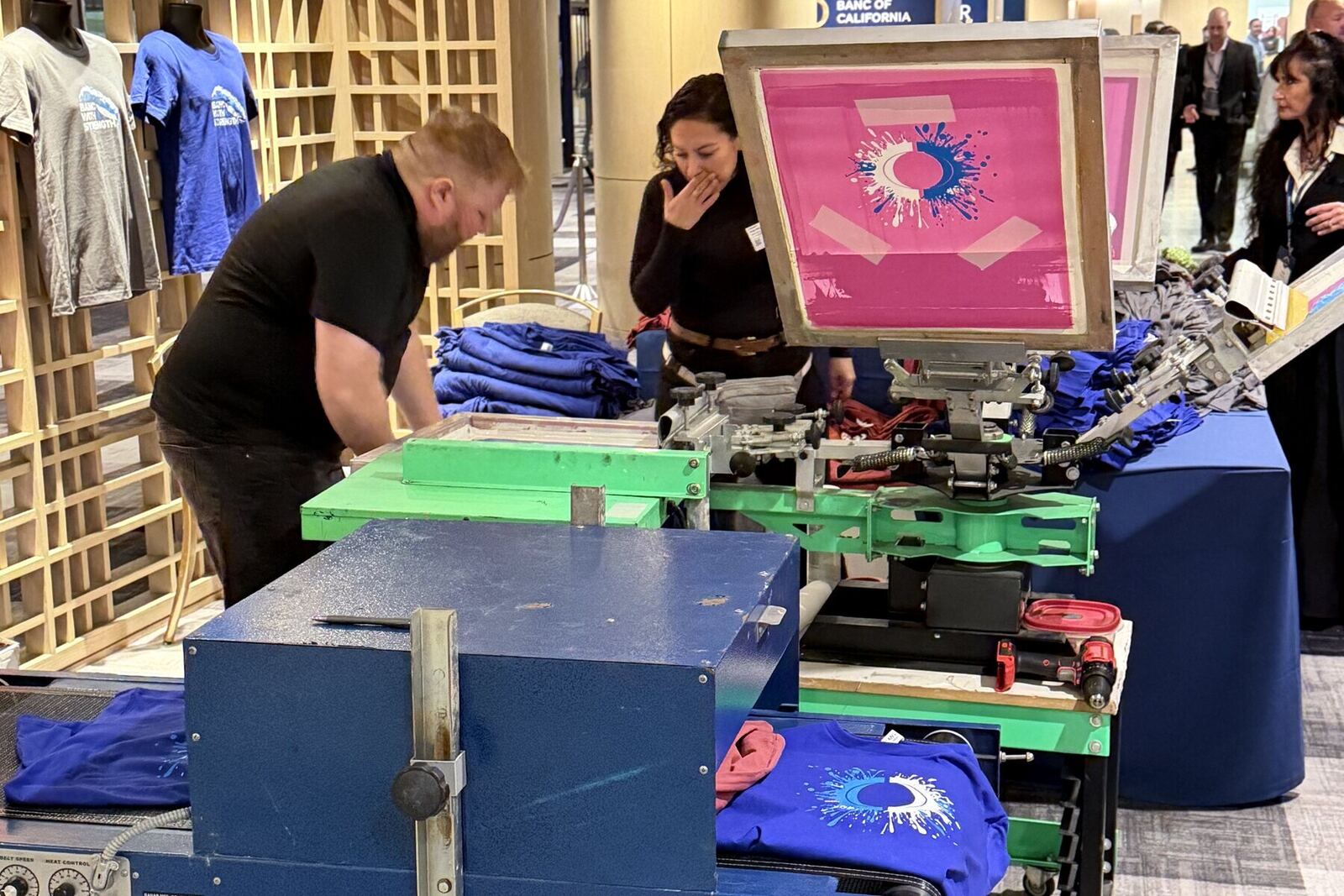
Intake runs off tablets, and that is the whole trick. Each entry becomes a numbered ticket, and tickets go to lanes by least-pending-work rather than round-robin, so a lane that hits a slow job does not build a backlog while its neighbour idles.
Staff work a queue board rather than a paper pile, seeing what is pending, on a press, or at handoff. That visibility lets a supervisor make the call that matters mid-event: open another lane, cap the queue, or start texting VIPs so the physical line stops growing.
Inventory is capped per size in the same system, so when the last large is claimed it disappears from the guest picker. Options — garment color, print location, a short design menu — are configured per event and kept short on purpose: every extra decision at the tablet is time the whole queue pays for.
Scope
What comes off the truck
Presses and power
Presses, platens, heat tape, transfer stock and backup units. Each lane wants a dedicated circuit, and we send a power sheet for your venue contact rather than discovering the problem at load-in.
Blanks or yours
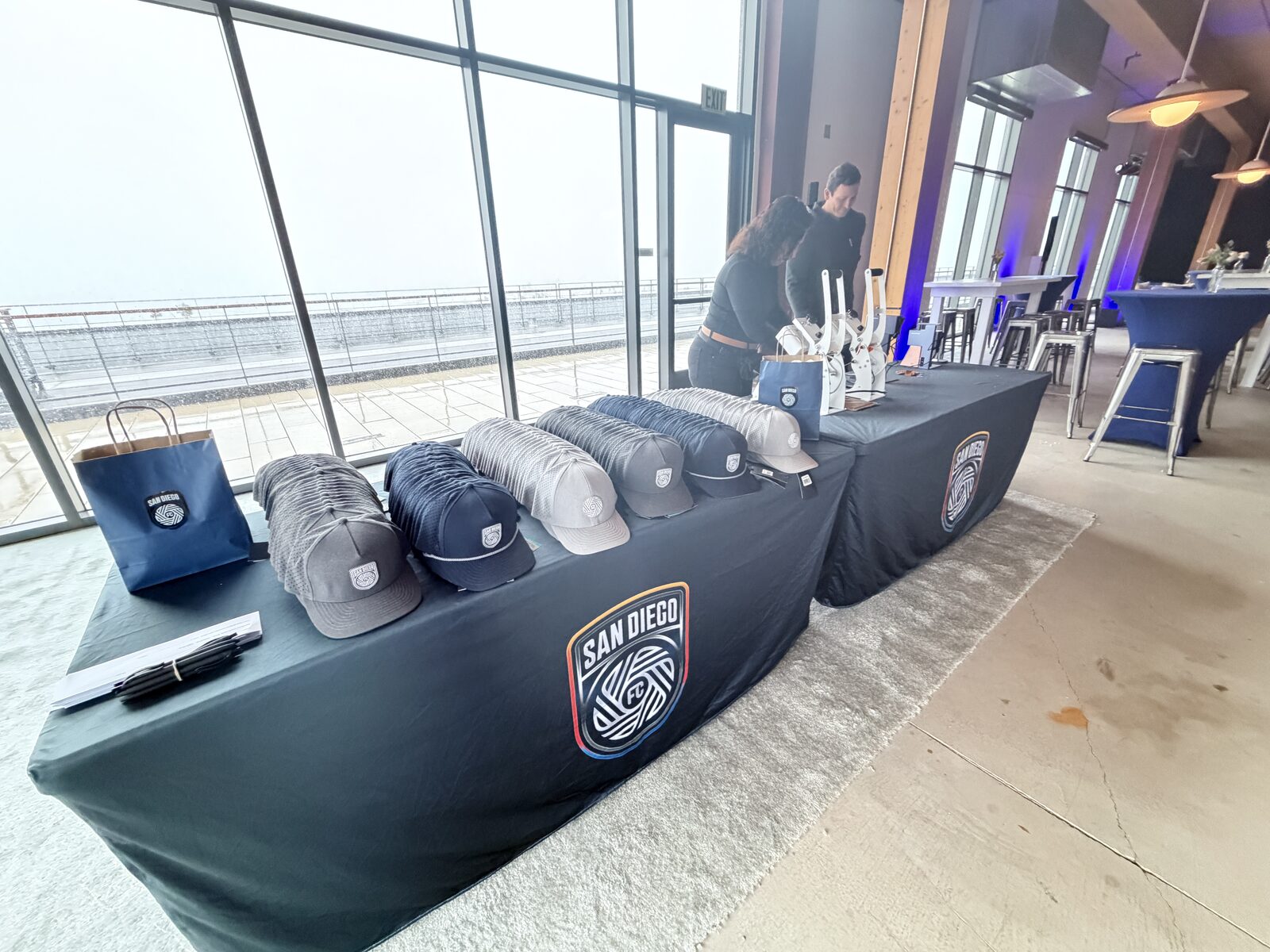
Augusta Sportswear and Badger cover most blank jersey needs; Bella+Canvas 3001 and Gildan handle the tee side of a mixed activation. Or we personalize kit you already own.
Operators, intake, files
Uniformed staff on tablets, presses and handoff at $250/hr including setup and teardown. Sponsor marks, crest art and the numeral face are proofed before load-in.
Next
Where to go from here
- Names & numbersThe core service: what is included, the layout standard and what it costs.
- Line setupLane math, equipment, staffing roles and load-in sequence.
- Pricing inputsHours, blanks, jersey count, art prep, travel.
- Event typesActivations, game days, leagues and expos.
- Straight answersSpeed, cost, fabrics, durability and client-supplied garments.
- PhotosReal crew shots from live jersey and press builds.
- Service areasSouthern California, Las Vegas and nationwide travel.
Brief us
Tell us about the jersey line
Send the date, the venue, how many jerseys you expect to hand out and whether you already own them. You get a lane count, a throughput estimate and a real number, usually within one business day.
Staffed stations start around $5,000 locally. Staffing runs $250/hr. Travel is $0 inside Orange County, Los Angeles and San Diego and $900 beyond. Most corporate programs land between $25 and $40 per guest all-in. The same crew also runs tees, a hat bar, embroidery, laser engraving and UV DTF stickers if your footprint has room for a second station.
Prefer to talk it through? (562) 614-4800 or contact@merchtroop.com.