Youth leagues & tournaments
Roster jersey printing, pitch-side
League work is the most data-driven version of this job. The names are known, the numbers are assigned, the garments usually already exist, and the deadline is a first whistle. Get the roster clean and this is the fastest line we run. Get it dirty and you spend the morning fixing spellings instead of pressing.
Roster
Clean data is the whole job
Send us the roster as a spreadsheet: last name as it should appear, number, size, team. We clean it and send back a flag list before we print anything. What is always on that flag list:
- Over-length names. The practical cap is around nine characters. Longer surnames need either an abbreviation or a smaller face, and that is a parent-facing decision, not an operator-facing one. You choose; we execute.
- Accents and punctuation. Hyphens, apostrophes and diacritics are all printable. They just need to be confirmed rather than guessed, because a wrong accent on a kid's jersey is not a small thing.
- Duplicate numbers. Two number sevens on one team happens more often than anyone admits, and it is far cheaper to catch on a spreadsheet than on a pressed jersey.
- Size mismatches. Youth sizing runs differently from adult XS–3XL. If you are supplying youth kit, tell us the actual cut so we bring the right platens.
Once the list is clean, names get gang-printed onto transfer sheets and sorted alphabetically. On site the operator picks the transfer, aligns it, presses it. That is a pick-and-press cycle rather than a print-and-press cycle, and it is why roster jobs clear so much faster than walk-up lines.
On site
Multi-day tournaments and the walk-up lane
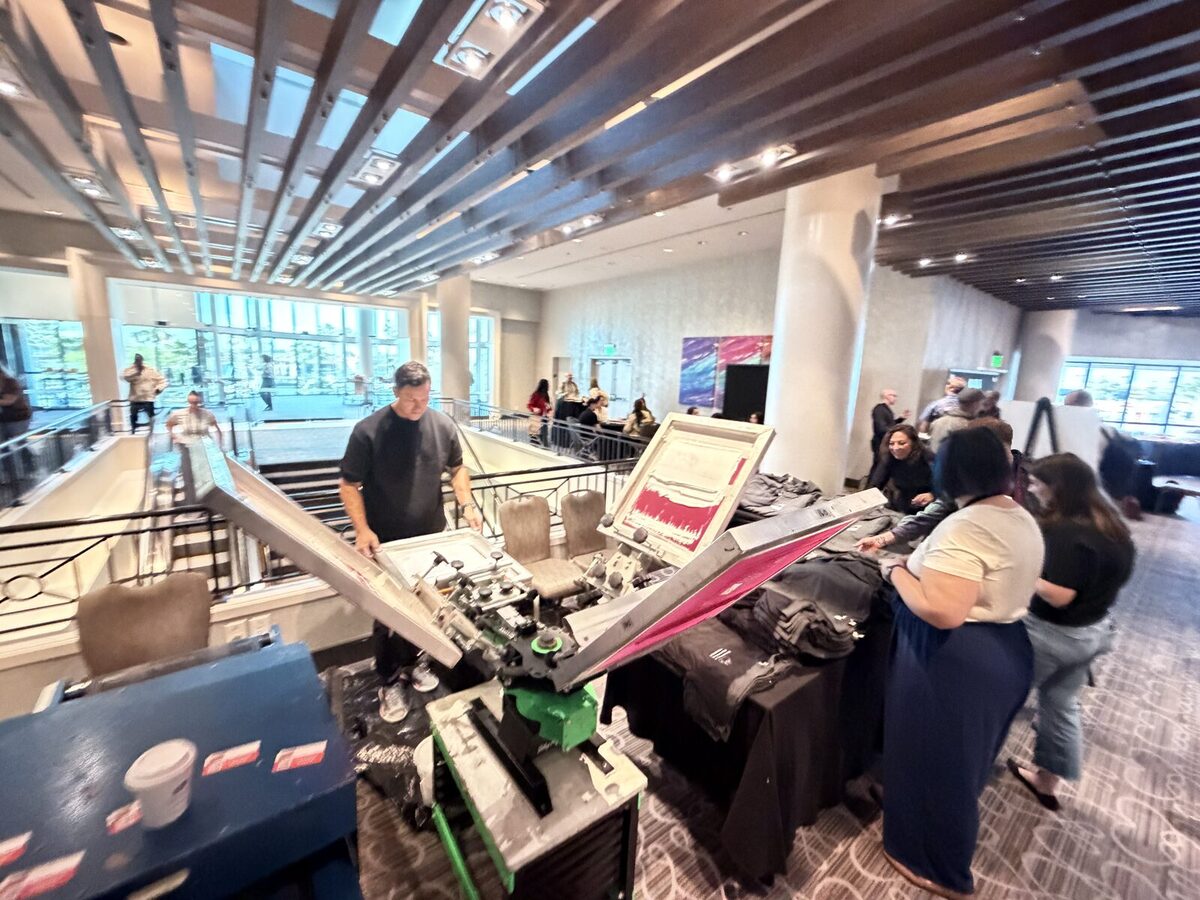
Tournaments are rarely just the roster. Families want a supporter jersey with their kid's name on it. Coaches want staff shirts. Late registrations show up on the morning of. So most league builds run two lanes with different jobs: one clearing pre-printed roster transfers, one handling walk-ups live.
Multi-day events add a logistics wrinkle worth planning for. Presses cool down, stock has to be recounted and secured overnight, and day-two demand is usually driven by whoever saw the line on day one. We plan day-two inventory against day-one actuals rather than against the original forecast.
Pitch-side means weather. Shade for operators, covered staging for blanks and transfers, and a power plan that does not run a cable across a walkway. These are unglamorous details that decide whether a Saturday works.
Cost
Why league work prices well
Two reasons. First, client-supplied garments are the norm — leagues buy kit in bulk on their own cycle, so we are only charging for crew, transfers and logistics. Second, pre-printed roster transfers compress crew hours, and crew hours at $250/hr are the largest line on a supplied-garment job.
Staffed stations start around $5,000 for a local event. Travel is $0 inside Orange County, Los Angeles and San Diego and $900 beyond that radius, which matters for tournament circuits that move venues weekly.
If you run a season rather than a single weekend, tell us. Repeat setups at the same venue with the same crew get materially more efficient after the first one, and we would rather plan the season than quote it a Saturday at a time.
Getting a whole roster to look like one set is mostly a numeral decision — basketball and football jersey numbers covers sizing across size bands, and turnaround times covers the roster deadline that makes gang-printing possible.
Send the roster shape
Team count, players per team, whether you own the kit, and the venue. Names and numbers · Send the brief or call (562) 614-4800.